Loading...
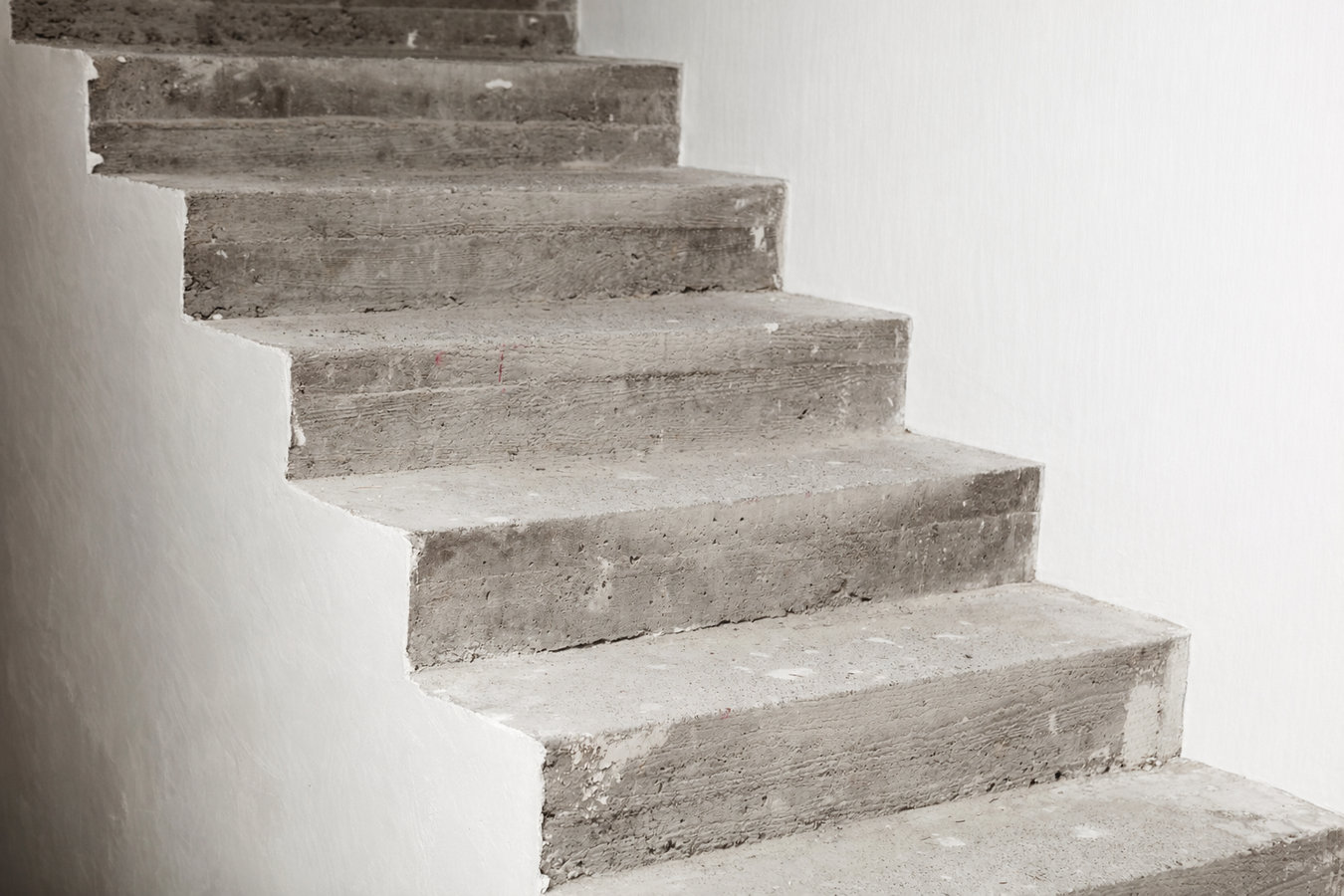
Crumbling, tilted, or icing-over front steps? We build poured-in-place concrete steps with the base prep and drainage that Casper winters demand, so your entry stays safe year after year.
Concrete steps construction in Casper starts below the surface with a compacted gravel base and footings deep enough for this climate, then builds up to a poured-in-place entry that is wider, safer, and pitched to drain - most residential projects take one to two days from demo to finished surface.
Casper has a lot of mid-century homes, and many of them have original steps that were built before modern standards - shallow footings, minimal base prep, no drainage pitch. Those steps crack and tilt because the ground moves under them every winter. Replacing them with steps built properly for this climate is not just a cosmetic upgrade. It fixes a real safety problem and protects the entry to your home for the next 25 to 50 years.
Steps work best when the surrounding concrete is solid too. If you are also planning concrete retaining walls to manage grade changes near your entry, or a slab foundation project at the same time, we can coordinate the scope in a single visit.
Cracks wider than a hairline running across the tread or breaking through an edge mean structural integrity is compromised. In Casper, water gets into those cracks, freezes, and expands every winter - making the damage worse each season. What looks cosmetic in October can become a real hazard by April.
If your steps no longer sit level, or there is a visible gap between the steps and your foundation, the base underneath has moved. This is common on Casper's older homes where original steps were built without deep enough footings to handle the freeze-thaw cycle. Tilted steps are a trip hazard that patching will not fix.
Spalling - when the top layer chips away in thin flakes - usually means the concrete was mixed poorly, sealed too late, or damaged by repeated freeze-thaw cycles. Once spalling starts, it accelerates through Casper winters and the surface becomes rough and uneven underfoot.
Steps should pitch slightly forward so water runs off. If water sits on the surface after rain or snowmelt, the steps were either built flat or have settled backward. In Casper, standing water on steps freezes overnight and creates an invisible ice hazard - one of the most common causes of winter falls on residential entry steps.
We build poured-in-place concrete steps for front entries, back entries, and garage access points. Poured-in-place is the better long-term investment for most Casper homes because it is built to the exact dimensions of your entry - the right width, the right rise, and the right pitch. We also handle demolition and haul-away of old steps so you are not left with a pile of broken concrete in your yard. Every set of steps we pour gets a textured, slip-resistant finish and a slight forward pitch to drain water off the tread.
We tie step projects into related work when it makes sense. If your project also involves concrete retaining walls to manage the grade at your entry, or if you need a slab foundation poured at the same time, combining the work saves mobilization and ensures everything is built to match.
Best for homes where standard precast sizes do not fit the entry width or grade.
Suits homeowners needing a durable, low-maintenance connection to a secondary entrance.
Good fit when existing steps are crumbling, tilted, or built without adequate base prep.
Ideal for mid-century Casper homes where original steps are too narrow or too steep.
Casper is one of the windiest cities in the United States. Average wind speeds regularly exceed 20 mph, and gusts of 50 to 70 mph are not unusual. That wind pulls moisture out of freshly poured concrete faster than it should cure, which causes surface cracking and weakness if a contractor does not account for it. A crew that works regularly in Casper will schedule pours during calmer parts of the day, use windbreaks when conditions call for it, and apply curing compounds to slow moisture loss. These are not optional extras here - they are how good work gets done in this climate.
Many of Casper's established neighborhoods have homes built from the 1940s through the 1970s. Steps on these homes are often original or were replaced cheaply at some point, and they may sit on minimal fill without the compacted base that modern standards require. Homeowners in Douglas, WY and Worland, WY face similar conditions in their older neighborhoods, and we bring the same base-first approach to every project across the region.
We respond within 1 business day and schedule a visit to measure your entry and look at your current steps. Pricing depends on what we see in person - the size, access, and base condition all affect the quote. No commitment required.
Once you agree on a price and scope, we handle any permit required by the City of Casper Building Division on your behalf. Scheduling fills up fast in spring and early summer - expect one to three weeks during peak season.
On the first work day the crew removes your old steps and hauls the debris. They compact the base, set forms, and pour on day one or day two depending on the project size. Your main entry will be blocked during the pour - plan to use another door for the day.
Stay off the steps for 24 to 48 hours after the pour. The contractor will walk you through the finished work, point out the drainage pitch, and give you care instructions - including when to apply sealer for the first time after the 28-day cure.
We come out, look at your entry, and give you a written quote. No obligation, no sales pitch.
(307) 337-0907We compact a gravel base and dig footings deep enough for Casper's frost depth before any concrete is poured. That base work is what separates steps that stay level through a decade of winters from steps that start heaving after the first hard freeze.
Casper's average wind speed is among the highest of any U.S. city. We account for that on every pour - scheduling around calmer windows, using windbreaks when needed, and applying curing compounds so the concrete does not lose moisture before it has finished hardening.
Every set of steps we build is finished with a forward pitch that sends water off the tread and away from your door. That slope is what prevents the overnight freeze that turns your front steps into an ice patch every winter morning from November through March.
We are licensed through Wyoming and work in Casper neighborhoods where our finished steps are visible to your neighbors. You can verify contractor license status through the Wyoming Department of Workforce Services. Local reputation matters in a community this size, and we stand behind every project we complete.
Every detail - base depth, drainage pitch, texture, and curing process - is chosen specifically for what Casper winters do to concrete. That is how we build steps that are still solid a decade from now.
For technical standards on cold-weather concrete placement, see the American Concrete Institute. For handrail and stairway safety requirements, see the International Code Council.
New slab foundations for garages, additions, or outbuildings built to Casper's frost depth requirements.
Learn moreHold back soil at grade changes near your entry or throughout your yard with a properly drained concrete wall.
Learn moreCasper's concrete season is short and schedules fill fast in spring - call today or submit a request online to lock in your project date.